BowlFast.AI doesn't guess. Every metric comes from computer vision analysis of your actual video — not estimates or generalised averages. What you see is what your body is actually doing.
Log in for free to save and analyse many bowlers. Guest runs can still complete a back + side report in this browser, but they are not stored in Past analyses.
Frame-by-frame as you scroll
BowlFast.AI uses advanced computer vision to analyze every frame of your bowling action. Get instant biomechanical insights and actionable coaching feedback.
Film one delivery side-on or from behind the bowler. We analyze everything from your run-up to follow-through.
Our computer vision model detects key biomechanical metrics frame-by-frame with frame-level precision.
Receive plain-language coaching feedback with specific drills to address any technical issues we find.
Compare your metrics over time. See exactly where you've improved and where to focus next.
BowlFast.AI runs specialised pipelines for side-on and back-view footage — each angle unlocks a different set of biomechanical metrics.
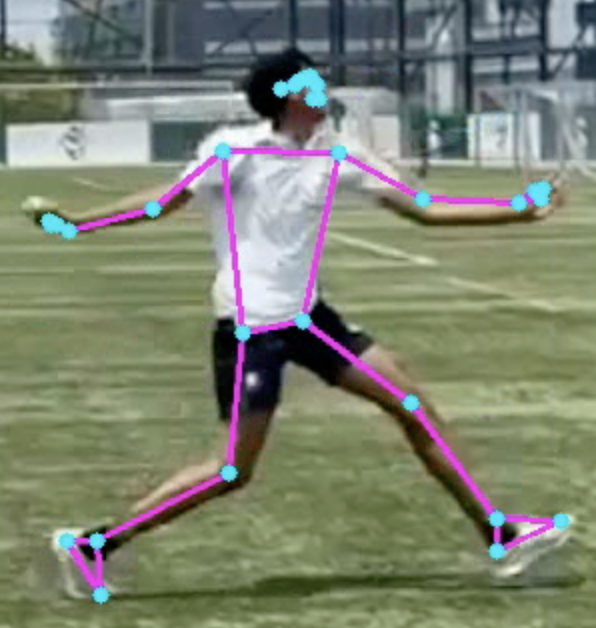
Filmed from the bowling-arm side. Captures the kinetic chain from run-up through release — the levers that actually generate ball speed.
Approach momentum into the crease — one of the strongest drivers of pace.
Back-foot to front-foot stride as a percentage of height, checked against efficient bracing range.
How firmly the front leg holds and extends from front-foot contact into release.
Chest drive over the front leg, plus how deep the bowling arm loads behind the trunk.
Filmed from behind, looking down the pitch. Tracks whether your body stays on line — and flags the patterns linked to back and side injuries.
Side-bend at release — a key load marker for the lower back.
Coil between hips and shoulders through the delivery stride.
Shoulder counter-rotation between back-foot and front-foot contact.
Whether the head and hips drift off the pitch line as the ball is released.
How straight the approach stays, and whether the exit continues down the target line.
Times the ball from release to the batter (or the stumps) and converts that flight time into an approximate release speed.
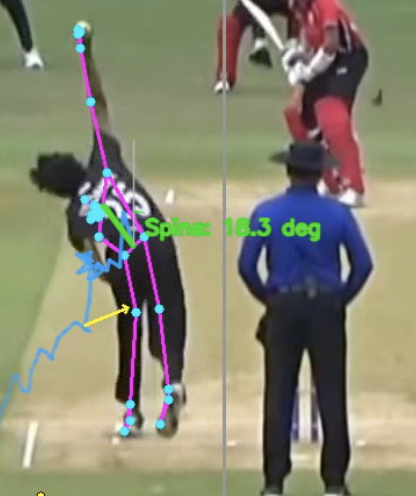
Fast bowlers miss more cricket than any other player type. BowlFast.AI flags the mechanical patterns that research links to lumbar stress fractures, side strains and knee injuries, so you can work on them early. It is coaching guidance, not a medical diagnosis.
Analysis happens at the individual frame level — not averaged across the delivery. You see exactly what your spine, hips, and shoulders are doing at BFC, FFC, and release.
No jargon. Every metric comes with a plain-language explanation, a risk rating, and a specific drill to address it — ready to take straight into training.
Train like an international player, with or without a coaching team. Just your phone, your action, and the data.
Every delivery gets full biomechanical breakdown. Here's a real example of what your analysis will show:
Each view is scored against an elite benchmark. Upload both views of the same session to unlock a combined score and the full seven-phase chart.
Every finding says how sure we are. Metrics the camera could not see clearly are flagged and kept out of your score, so a hard-to-read clip cannot mislead you.
Each priority comes with specific drills and the reason behind them, ranked so you know what to fix first.
Stride rhythm is erratic: the final strides are irregular and the bowler over-strides at the crease. Start with tape-marker stride drills.
Arms flare wide in the approach (flare 1.63). Keep the elbows in for better balance into the crease.
Follow-through runs straight down the target line, and the release speed estimate is about 132 km/h.